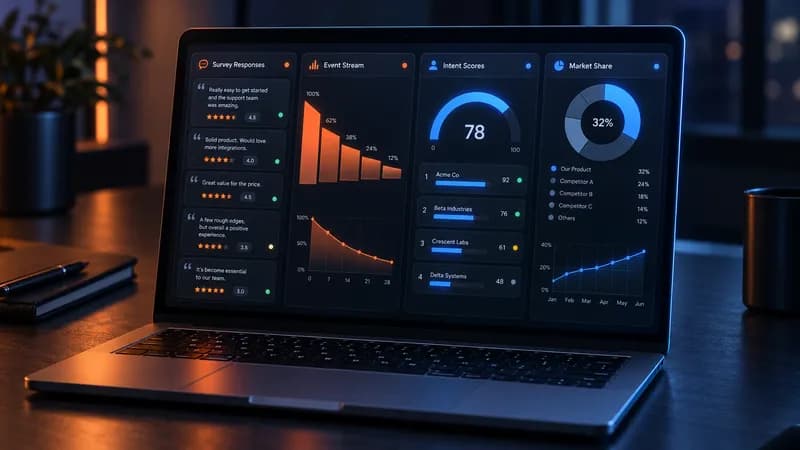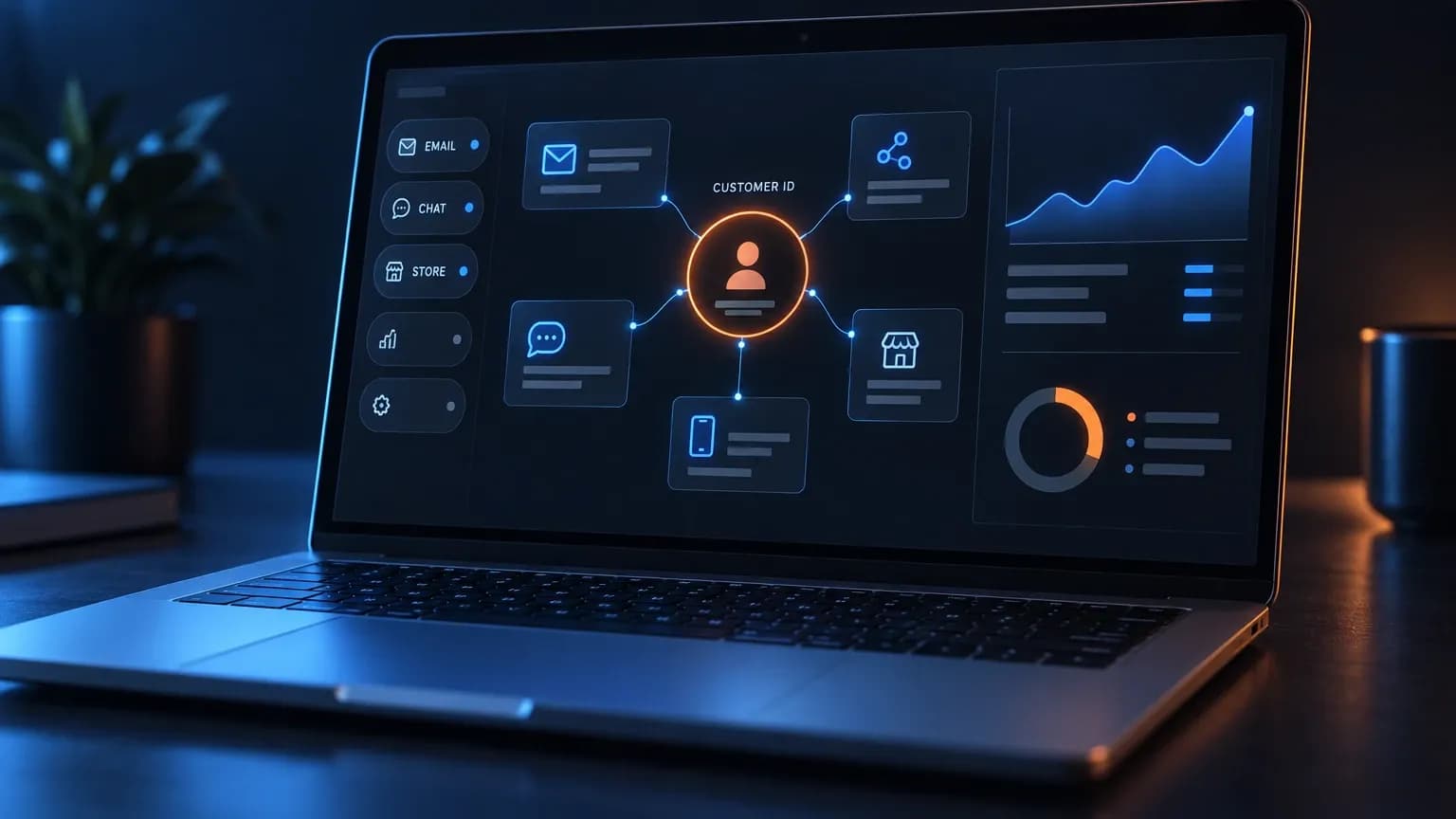
The channel count went up this year, and every number that measures it went up too. The experience your customer gets went the other way, in ways no channel report is built to catch. Somewhere between the email and the page, your company told one customer two different things about one order, and both systems were certain they were right. You have probably explained that away twice already, as a data issue and then as a timing issue. Which of the two answers was the real version of your company?
The channel count went up this year, and every number that measures it went up too. The experience your customer gets went the other way, in ways no channel report is built to catch. Somewhere between the email and the page, your company told one customer two different things about one order, and both systems were certain they were right. You have probably explained that away twice already, as a data issue and then as a timing issue. Which of the two answers was the real version of your company?
One field in your stack decides what every channel says next, and it is not the same field in all of them. Adobe's AI and Digital Trends research found that 78% of customers expect a consistent experience across digital and physical channels, while only 45% of brands deliver one. Four systems hold four versions of one customer, and whichever one answered last is the version your customer believes.
What omnichannel marketing actually requires (and what multichannel already does)
Multichannel is a legitimate strategy, and most teams using the omnichannel word are running it well. Each channel gets a budget, a manager and a target. Then a customer walks from one channel to the next and the machine stops knowing who they are.
Four dimensions separate the two models. Only one is about the number of touchpoints, and it is the least useful.
Dimension | Multichannel | Omnichannel |
|---|---|---|
Touchpoint count | As many as budget and ambition allow. Each one is added on its own business case. | Not the unit of measure. Two touchpoints that agree qualify. Seven that do not never do. |
Identity model | One record per system. Email, the store, the ad platform and support each hold their own version. | One customer ID that every touchpoint reads before it speaks and writes after it acts. |
Decision latency | Days. A suppression rule changes in one tool and gets copied to the others when someone remembers. | Minutes to hours. One decision reaches every touchpoint because there is one place to make it. |
Owner | The channel manager owns the channel's number. | One person owns the answer the customer gets, in every channel that gives it. |
Settle the argument with the third row. If a change to one customer's suppression status has to be made four times, you are multichannel. If it is made once and the other three systems find out, you are not.
The three-question test you can run on your own stack
Three questions, your own touchpoints, one afternoon. No vendor, no workshop. These are the classes your customers already ask, and each fails in a specific way when the records behind your channels disagree.
A status question. "Where is my order, and what am I on?" Ask it in two places, the support inbox and the chat on your site. One reads the order system, the other the helpdesk. If the answers differ by more than a delivery estimate, the records are not shared.
A price question. "What am I entitled to right now?" Ask it where the customer last bought, then in the channel that sends your email. Per-channel promotions are the most common reason a loyal customer is quoted two prices in the same week.
A preference question. "Why are you still sending me this?" Take a customer who unsubscribed or asked not to hear about a category. Check whether that instruction reached the ad platform, the SMS tool and the retail list. It usually reached one.

The checklist for the afternoon.
One question with two different answers is a fail, not a partial pass and not a maturity level. You can run five channels, a journey map and a personalization engine, and still fail on question three before lunch.
Identity resolution, explained for people who do not own the data warehouse
Identity resolution has an intimidating name and a modest core: decide which identifier represents a customer, then require every system to carry it.
Three things have to share that ID. The customer record, with a name, a contact and a history. The event stream, what the person did and where. And the suppression state, what they asked you not to do.
Anonymous traffic, ad audiences and analytics sessions work at the level of a device or a segment, not a customer. Starting there is how an identity project becomes a data warehouse project.
The cheapest merge that works, in order:
- Pick the identifier your checkout and your email platform both already hold. If they differ, pick the one you can make mandatory on every form this quarter.
- Make it a required field at every capture point, including the store, the call center and the webinar form.
- Carry it as a parameter on every link you control, so a click in an email arrives with the identity attached.
- Keep one mapping table: system, its internal ID, your canonical ID. Reconcile it nightly. Real time can wait, and a suppression rule does not need it.
- Read before write. Each touchpoint checks the table before it acts, not after.
At small scale that is the whole architecture. It buys suppression that holds, one frequency cap across channels, and a status answer that does not change with the channel. It will not buy real-time personalization, and below a few hundred thousand active customers that is a fair trade.
Once the ID is shared, the numbers each system produces become comparable, and keeping them defensible in front of a board is the work described in marketing measurement. A merge you cannot measure is a merge you cannot defend at renewal.
Giving each channel one job
Every channel gets one job and one output, written on one page: the channel, its job, the measure that proves the job is being done, and what gives something up when a new one joins.
A fifth channel rarely arrives because a customer needed it. It arrives because a budget cycle allocates by channel, or a competitor is visible on a new surface. The reconciliation work that follows has no owner and no budget line.
Which channel should carry which piece of content, and which ones you can drop without losing reach, is the question our content distribution strategy guide answers in full.
The label costs nothing to adopt. The merge does. The 2026 martech landscape, counted by Brinker and Riemersma, came in at 15,505 products, up 0.7% year over year, so supply has flattened while the coordination work behind those tools has not.
What breaks first when the merge fails
The symptoms arrive in a stable order, and the order tells you which department notices first.
One: the reminder for something already bought. Attentive's 2026 personalization research, a vendor survey, found 54% of shoppers are regularly reminded to buy something they already purchased, and 67% are more likely to unsubscribe when it keeps happening. This one needs no analytics. It arrives as a complaint.
Two: the offer that contradicts itself. The same customer gets 15% off by email and full price in the app on the same day. Someone set a promotion per channel and nobody reconciled the two.
Three: the suppression that does not hold. A customer unsubscribes in one channel and stays reachable by SMS and paid social. That is a compliance problem before it is a marketing problem.
Four: the duplicate customer. A second profile at the store, a second email at checkout. The team notices when a report shows more customers and flat revenue. From then on nobody trusts the numbers enough to act on them.
The first symptom is visible to customers, the second to finance, the third to legal, and the fourth only to the analyst who stops raising it.
Gartner measured what personalization does on data that disagrees with itself: 53% of customers reported a negative experience, and that group was 3.2 times more likely to regret a purchase and 44% less likely to buy again. The survey covered 1,464 buyers in late 2024. Read it as a measurement of what happens after symptom one, and note that the claim is about personalization rather than about omnichannel as a category.
Coordination is the one operational variable with a measured gap. Attentive's Marketer Pulse in March 2026 found 78% of brands with well-coordinated messaging programs reporting year-over-year improvement, against 50% of brands whose channels run independently. It is a vendor survey of marketers, and still the closest thing to a hard number on why the merge pays.
Measuring it without a new dashboard
Skip the new dashboard. One number that changes a decision, taken from instrumentation you already pay for, does the job.
Pick one, depending on the symptom you found first. Duplicate profiles per 1,000 active customers. Post-purchase complaints per 10,000 sends. Or the share of status questions answered identically in two channels, sampled twenty times a month.
The third is the one I would choose. It cannot be improved by better tagging, it reads the customer's experience instead of proxying it, and it costs an hour a month.
Keep it for two quarters before you add a second. Measurement grows dimensions until the number stops moving. Picking one that survives a board question is the discipline described in marketing KPIs, and it matters more here than on a channel report.
If suppression now holds but the repeat-contact rate has not moved, the merge worked and the messaging is the problem. If neither moved, the touchpoints are not reading the ID, whatever the diagram says.
Frequently Asked Questions
Is omnichannel the same as multichannel?
No. Multichannel counts touchpoints. Omnichannel is a property of the record behind them. A two-channel stack with one customer ID passes the test above. A seven-channel stack with six records fails it, and the failure is invisible in any report that measures channels separately.
Do you need a CDP to be omnichannel?
No, and the answer needs a threshold rather than a preference. A CDP earns its price when you run several brands or markets, need real-time decisions inside a session, or carry heavy anonymous traffic at scale. Below that, a canonical ID and a nightly mapping table do the job. Of the guides I read, one asks the question and none gives a threshold.
How many channels is too many?
The number matters far less than how many channels one team can keep answering the same way. If adding a channel requires a new suppression list or a second copy of the customer record, that channel is already one too many.
Does omnichannel apply to B2B?
The test transfers intact. The channel inventory does not. A buying committee asks the same three questions across email, a call, a webinar and a proposal, and the record has to be the account rather than the person.

Run the Test Before You Add the Next Channel
You need an afternoon, one real customer and three questions. You will have an answer before you spend anything, and the answer is allowed to be no. If it is no, fix the identifier before you touch the creative. A shared ID and a nightly mapping table will do more for the customer than a new journey map, and it is the only change here that makes the next channel cheaper. Allable keeps the channels your team already runs inside one project, so the answer one channel gives can sit next to the answer another gives. That is not identity resolution and it does not replace the merge, but it does put the gap where you plan the next campaign.